My Cup Runneth Over…But Not in a Good Way
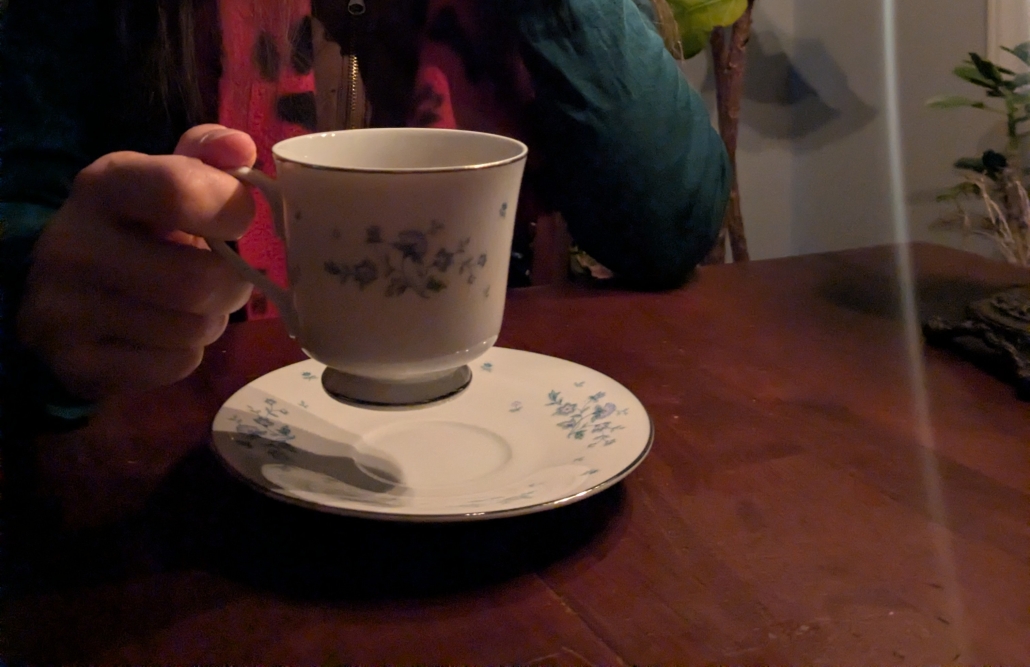
Over-giving can leave us exhausted and disconnected. In this personal story, I share a moment that stands out among many over the years when I struggled with giving too much of myself. Over time, I’ve learned that true connection and self-love begin with filling my own cup.
It was the beginning of my third year of nursing school. I had a core group of friends that I spent time with. They were social, outgoing, and liked to party. Honestly, they were everything I was not. I hated large gatherings, I didn’t enjoy drinking, and I didn’t like late nights. I always felt out of place around them, like I was trying to fit myself into a mold that wasn’t quite meant for me. It was always me reaching out to make plans, and that effort was rarely reciprocated. I imagine that if I had left that circle altogether, my phone might never have rung, and one day they would think to themselves, “I wonder what happened to that Cassie girl?”
But the fear of searching for new friends felt even scarier than the pain of spending time with people I didn’t fully connect with. Looking back, I recognize how deeply my sense of self-worth was eroded, and how I was looking for love in all the wrong places. I felt terribly lonely almost all the time. The thought “why does no one like me” dominated my inner world.
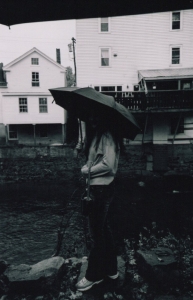
Me in my college years, before I understood what it meant to fill my own cup.
Physically, this took a toll on my body as well. I never linked the two back then, but now I understand the mind-body-spirit connection more clearly. The constant fatigue, the sensation of heaviness that felt like lead weights, the brain fog and forgetfulness were manifestations of everything I was holding onto. The pain, the trauma, the unprocessed energy, all living in my body with no awareness of how to recognize it, or how to let it go. My body was trying to send me signals.
My outside world reflected my inner world: disconnected. When pain is so great, we often retreat and avoid. Focusing on our external environment can be a form of disconnect, a way to avoid what we don’t want to see or feel inside. We engage in a battle to fix the world around us, believing that this is the way to find peace and happiness.
Even though I often felt unseen and disconnected, I kept reaching out to the same friends, hoping that with each failed attempt at connection, the next one would be different. When September arrived and I was turning 21, I decided to host a sit-down dinner party at my friends’ apartment. I wanted to set the stage for a special evening, a fancy, intimate dinner where we could dress up and connect in a way that went beyond our usual superficial hangouts. I even had a dress of my own design, sewn by my mom, for the occasion. I told my friends not to worry about the food. I would cook it, plan the menu, and buy all the ingredients.
I was going to make it really easy for them to love me. All they had to do was show up and spend time with me. Surely this would be enough? I would be enough…
Very soon, both my carefully laid plan and my heart were crushed. They decided they wanted it to be a “two for one” sort of party. It was the start of the school year, and they wanted a big celebration to ring it in. “You don’t mind, right Cassie?”
Of course not. How could I say no? At that time, I wasn’t capable of saying no. Saying no felt like giving them permission not to love me. Saying no created distance, and I feared it would make people leave and stop talking to me. And who would I have if I didn’t have them in my life? I would have no one. As alone as I felt, I feared that refusing them would leave me feeling even more isolated.
The party was nothing like I had imagined. Dinner was rushed, more of a grab-and-go affair. Once they were done, they went off to get ready for the next gathering. There was no bonding, no well wishes, no real connection.
Despite all this, I kept giving of myself, hoping that one day they would see me, recognize me, and care for me in return. I cleaned their house when I visited, took on the role of designated driver on nights out, cooked meals, and helped them pack and move when they relocated.
Recognizing When You’ve Hit an Emotional or Physical Wall
Writing about this still brings up a lot of emotions. I see so clearly a young woman who was simply searching for love. But I was going about it all the wrong way. There was an inner wound that I did not, and probably could not at the time, see or recognize.
Looking back, I do not blame my friends for how things unfolded. They were not responsible for my choices or the hurt I experienced. I was the one trying to fill the emptiness inside myself, and I was the one who believed that giving more of myself would earn the love and connection I craved. I imagine that if they reflected on that same moment, they would see it very differently, through the lens of their own wounds, growth, and journey of healing.
Past wounds and trauma leave a mark on us. We lose a part of our true essence, the connection to our Spirit Within, as life’s struggles begin to accumulate and weigh on us. In Shamanic terminology, this is called Soul Loss, which I explore in more detail in another blog post HERE. Soul loss leaves a void within us that we are always trying to fill. Often, we attempt to fill this void through external means, and this is where we become caught up. These patterns are not only our own. When we look within families, we can see similar wounds and stories repeating across generations. This is where I was caught in the story I share today. The same dynamic I experienced with my parents was repeating itself in my friendships. I was trying to repair the past, and while doing so, giving more of myself than I could fill or replenish. I was pouring from my cup into theirs.
But eventually, this becomes too much. We crash and hit a wall. Sometimes this happens through physical challenges. We get sick, and our body forces us to rest and retreat from everything we have been doing. Other times, we hit an emotional wall. The pain becomes too great to carry, and we finally seek help.
Seeking help can feel difficult because society often teaches us that needing support means we are broken or that something is wrong with us. This could not be further from the truth. Healing is an act of courage. It is an act of love, both for ourselves and for others. Trauma can teach us that love is earned through doing or giving. But true love begins with love of self. From that place, we can give in a heart-centered way and finally receive the love we were seeking all along, independent of others’ behavior, actions, or emotions.
Filling Your Own Cup
My over-giving tendencies did not shift overnight. And if I’m honest, this wasn’t anywhere near the moment that I recognized this unhealthy pattern in my life. It wasn’t until years later in my late 30s that I began to seek out a better way to live my life. And I didn’t recognize that this was a large source of energy drain in my life.
As you read this, perhaps parts of my story feel familiar. Maybe you, too, have found yourself over-giving, moving through the same patterns again and again, like tire tracks worn deep into the road. Maybe you are beginning to notice the exhaustion that comes from burning the candle at both ends. This noticing is not a failure. It is the call of your Spirit Within, an invitation to pause, to become aware, and to consider a new direction.
For me, the first step was seeking therapy, a safe space to explore my past experiences and release what had been held inside. That step eventually led me to study Shamanism as a path of connection, and shamanic healing as a way to reclaim and reintegrate my true self. Your path may look different, and that is okay. Healing is unique to each individual.
Healing does not begin by giving more. It begins by turning inward and listening to what your body and heart have been trying to tell you all along. Learning to fill your own cup first is not selfish. It is an act of courage and self-respect. It is the moment you choose to step out of familiar grooves and begin carving a new path for yourself.
Carving a New Path
Healing is a process of examining your story and gently reweaving it, repatterning the old ways of being. Just like tire tracks shaping a new road, these patterns often begin with a single moment: the decision to choose something new. Over time, as the same route is traveled again and again, the new path becomes easier to traverse. Creating a new route takes intention and patience. At first, it may feel unfamiliar or uncomfortable. But with time, the new path strengthens, and the old one slowly fades, becoming overgrown as if it were never there at all.
So have courage and perseverance. In time, the new path will feel steady beneath your feet. It will become familiar and easy to walk. One day, you may find that you no longer have to think about each step at all.
You will move forward guided not by old wounds or patterns, but by your own heart. Seeing each step clearly, navigating your life from a place of self-love rather than fear.
Walking this path with you,

If this story resonated with you and you’d like to continue exploring themes of healing, self-connection, and filling your own cup, you’re welcome to join my newsletter, follow me on TikTok or YouTube.
If you feel called to deeper support, you can also learn more about my healing services here.


Leave a Reply
Want to join the discussion?Feel free to contribute!